

During the production of plastic bags and packaging bags, blades do more than simply cut materials. They also affect seal integrity, cut-edge shape, and the ease of use of the finished products. Different bag designs, film materials, and bag-making processes require different types of blades.
Common bag making machine blades include Toothed Blades, Perforation Knives, and other specialized cutting knives. Heat-sealing and cutting blades are primarily used in processes that require sealing and cutting. Toothed Blades perform cutting or create specific cut patterns based on their tooth design. Perforation Knives create intermittent cut lines with small uncut sections that allow products to be torn off easily while remaining connected until needed.
If you are looking for bag making machine blades or need custom blades compatible with your existing equipment, understanding the functions of different blade types is a good starting point. You can then confirm the specifications based on your actual production process.
01What Types of Blades Are Commonly Used in Bag Making Machines?
Bag making machines use different types of blades depending on bag design, sealing methods, cutting positions, and production processes. The following are three common blade types and their respective applications.
Heat-Sealing and Cutting Blade

Toothed Blade
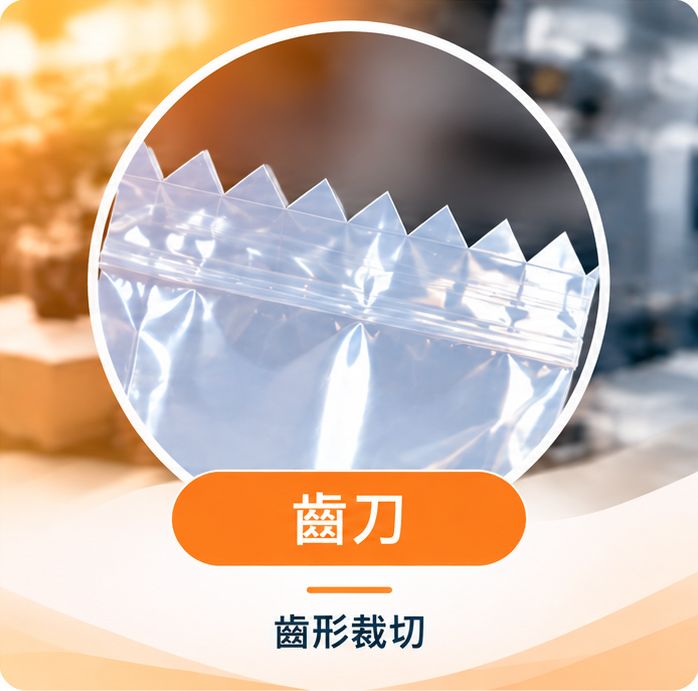
Uses a specially designed toothed cutting edge to produce cuts in specific shapes. Tooth geometry, tooth pitch, and mounting specifications must be confirmed before selection.
Perforation Knife

Creates intermittent cut lines while leaving small uncut sections to keep the material connected. It is commonly used for packaging products designed to be torn off individually.
1. Heat-Sealing and Cutting Blades: For Sealing and Cutting Applications
Heat-sealing and cutting bladesare primarily used in bag-making and packaging equipment that seals plastic film and cuts it to size. Depending on the machine configuration and production process, the film may be melted and bonded through heating before the blade completes the cutting operation.
The design of these blades is affected by film material, thickness, sealing method, heating conditions, and machine structure. Even if two blades look similar, they may not be interchangeable if their specifications are incompatible with the equipment.
When selecting a heat-sealing and cutting blade, consider the following:
- Processing materials, such as PE and PP plastic films.
- Sealing method and cutting position.
- Blade length, width, thickness, and mounting dimensions.
- Machine model and the structure and mounting method of the original blade.
If the existing blade is worn or the production process needs to be adjusted for different bag designs, confirm the actual machine and blade specifications before determining whether a custom blade is required.
2. Toothed Blades: Cutting According to Tooth Design
Toothed Bladesare industrial cutting tools with specially designed toothed edges. They are commonly used in packaging, bag-making, and other processing equipment that requires specific cutting patterns. Their actual applications depend on tooth geometry, blade dimensions, and machine design.
In bag-making applications, Toothed Blades can be designed with specific tooth profiles and cutting edges to achieve the required cut shape. Some blades are designed for use with particular bag-making mechanisms, so compatibility should not be determined by tooth count or appearance alone.
When selecting a Toothed Blade, consider the following:
- Tooth profile, tooth pitch, and tooth-tip shape.
- Blade dimensions and mounting method.
- Type and thickness of the film or bag material.
- Required cut shape and machine operating method.
Different materials may have different properties and therefore require different blade designs. When replacing an existing Toothed Blade, providing photographs, dimensions, or a physical sample of the original blade can help confirm the required specifications.
3. Perforation Knives: Creating Easy-to-Tear Cut Lines
Perforation Knives, also known as dotted-line knives, create intermittent cut lines in a material while leaving certain sections uncut. This allows the product to be torn along the cut line when needed.
These knives are commonly used for roll garbage bags, food storage bags, and other packaging products designed for individual tearing. The ratio of cut sections to uncut sections, along with the spacing between cuts, affects tearing performance and the strength of the connecting sections.
When selecting a Perforation Knife, confirm the following:
- The material to be processed and its thickness.
- The length of each cut and the ratio of cut to uncut sections.
- Perforation spacing and arrangement.
- Production speed and the machine's cutting mechanism.
Perforation performance is not determined by the knife alone. Material properties, machine settings, and actual processing conditions also play a role. If you need to adjust the tearing performance, evaluate the knife design and production conditions together.
02What Are the Differences Between Heat-Sealing and Cutting Blades, Toothed Blades, and Perforation Knives?
All three blade types may be used in packaging or bag-making equipment, but their primary functions differ. Before purchasing a blade, determine whether the application requires sealing, a specific cutting pattern, or intermittent cuts that allow the material to be torn off easily.
| Comparison | Heat-Sealing and Cutting Blade | Toothed Blade | Perforation Knife |
|---|---|---|---|
| Primary Function | Performs sealing and cutting as part of the production process | Cuts according to the specified tooth design | Creates intermittent cut lines |
| Common Applications | Plastic bag sealing and cutting | Applications requiring specific tooth profiles or cut patterns | Roll bags and packaging designed for easy tearing |
| Key Design Considerations | Sealing method, cutting position, and machine structure | Tooth profile, tooth pitch, and cutting-edge design | Cut spacing and the remaining connecting sections |
| Selection Criteria | Material, sealing method, and dimensions | Material, tooth profile, and mounting specifications | Material, perforation ratio, and cut spacing |
03How to Choose Bag Making Machine Blades: Four Key Factors
If you are looking for bag making machine blades or preparing to replace an existing blade, confirm the following four factors to avoid choosing a blade based solely on its name or appearance.
1. Identify the Processing Material
Different plastic films, composite materials, and woven bags may vary in thickness, toughness, and processing behavior. When selecting a blade, provide the actual material type and thickness, along with details of the current processing method.
2. Define the Required Cutting Function
Does the process require sealing followed by cutting, creating a specific toothed cut, or producing intermittent cut lines for easy tearing? Identifying the required function first helps narrow down the appropriate blade type.
3. Confirm Dimensions and Machine Specifications
Bag making machine blades generally need to fit existing equipment. In addition to blade length, width, and thickness, confirm hole positions, mounting methods, cutting-edge geometry, and any applicable dimensional tolerances.
If the original technical drawing is unavailable, prepare photographs of the existing blade, its actual dimensions, the machine model, and a physical sample. These details can help the blade manufacturer verify the specifications.
4. Evaluate the Material and Processing Requirements
Blade material, heat treatment, cutting-edge finishing, and operating conditions can all affect blade durability and cutting performance. Evaluate these factors according to the actual operating environment and machine requirements rather than relying solely on price or hardness as the deciding criteria.
04Can't Find the Right Bag Making Machine Blade Specifications? Can Custom Blades Be Made?
Custom bag making machine blades can be considered when the original manufacturer's blades have been discontinued, the existing equipment requires special specifications, or standard products cannot meet the actual processing requirements.
Custom blades are generally specified according to machine configuration, original blade dimensions, cutting-edge geometry, and processing requirements. To reduce the time needed to clarify specifications, prepare the following information when requesting a quotation:
- Original Blade Photos:Front, side, and installation-position photographs.
- Dimensional Information:Length, width, thickness, hole positions, and other critical dimensions.
- Equipment Information:Brand and model of the bag making machine or heat-sealing and cutting machine.
- Processing Conditions:Material type, material thickness, and the blade's intended application.
- Special Requirements:Tooth profile, perforation spacing, cutting-edge configuration, or other drawing specifications.
The more complete the information, the easier it is to determine the appropriate manufacturing specifications. Original technical drawings or physical samples of the existing blade can also be provided as references for evaluation.
05Huang-Qi's Custom Industrial Blade Manufacturing Services
Huang-Qi specializes in industrial blade manufacturing and can evaluate specialized blades in different sizes and configurations according to machine types, equipment specifications, and customer requirements.
For bag-making, packaging, and related processing applications, customers are welcome to inquire about specification evaluation and customization for Toothed Blades, Perforation Knives, and other specialized cutting knives based on their actual products and processing conditions.
If you are looking for bag making machine blades, heat-sealing and cutting blade manufacturing, or custom blade solutions, we recommend preparing your equipment information, original blade dimensions, and processing material details in advance to make specification verification more efficient.
06Frequently Asked Questions (FAQ)
Q1. What types of blades are commonly used in bag making machines?
Common blades used in bag-making and packaging applications include heat-sealing and cutting blades, Toothed Blades, Perforation Knives, and other specialized cutting knives. The actual configuration depends on the bag design, processing materials, and machine structure.
Q2. What is the difference between a heat-sealing and cutting blade and a Perforation Knife?
A heat-sealing and cutting blade is used in processes that involve sealing and cutting. A Perforation Knife creates intermittent cut lines while leaving some sections connected, allowing the product to be torn along the cut line. The two blade types serve different purposes and should be selected according to the actual processing requirements.
Q3. Can Perforation Knives be used for roll garbage bags?
Yes. Roll garbage bags are a common application for Perforation Knives. The appropriate knife specifications and perforation results must still be determined according to the bag material, thickness, cut-to-uncut ratio, and machine design.
Q4. Can I request a quotation without a technical drawing of the bag making machine blade?
Yes. You can initially provide photographs of the original blade, its actual dimensions, the equipment model, and the processing material. If an existing blade sample is available, it can also serve as a reference for specification verification. Manufacturing feasibility and suitability must still be evaluated individually.
Q5. What information is required for custom bag making machine blades?
We recommend providing a blade drawing or physical sample, dimensions, hole positions, cutting-edge geometry, equipment model, and processing material. Any special tooth profiles or perforation requirements should also be specified to help confirm the manufacturing requirements.
This article provides general information on blade selection. The suitability of a specific blade must be verified according to the machine structure, processing material, blade specifications, and operating conditions.

